Archive for category Mule Deer News

Utah changes affecting Deer Hunters

Posted by admin on Wednesday, 3 March, 2010

Utah has extended the application period to March 8 due to computer problems.

For 2010 Utah is not requiring archery hunters to choose a region.

A hunting license is required before you may apply to hunt deer via the draw. Ditto bonus and preference points.  The price for a non-resident license is $65.  The price for a general tag is $263. The price for limited entry is $463 and for premium limited entry – $563.

If you hunt deer you will probably be required to report online within 30 days. If you fail to do so, you will be assessed a $50 late fee the next time you apply.

Rifle deer hunts for 2010 are limited to five days, and in some cases three days.

Utah is making available permits called management buck permits to get rid of 3-points and under. Beware, you lose your bonus points on these hunts.

The Best Buck Money can Buy

Posted by admin on Thursday, 12 November, 2009

Carl Malone, of the Utah Jazz, killed this huge Mule Deer Buck:

Photo submitted by Paul Baxter

Mule Deer Escaping to the Eastern Plains

Posted by admin on Thursday, 5 November, 2009

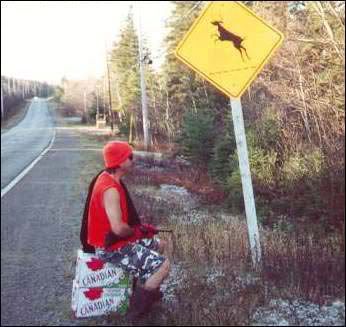
In an effort to avoid mountain lions, it seems that Mule Deer have been fleeing Eastward by the truckload, as evidenced by these photos:   

New Typical Record Book Buck

Posted by admin on Monday, 5 October, 2009

What do you think? Is this a new world record typical mule deer buck?

—————————————————-

Email submitted by Paul Baxter

This deer was shot 12 miles east of Monticello, Utah by Max Johnson in 
1968. He kept it at his home and didn’t think much about it until his 
son took it to the 2009 International Sportsman’s Expo in Utah. The 
Safari Club staff had a booth near by and asked if they could measure 
it. According to it’s method of scoring, it was 228. The Safari Club 
folks returned it and announced that it was now the Club’s new world 
record.
 
Max’s son is Keele Johnson, a good friend of mine and a former Utah 
legislator, is one of the guides on the moose hunt with me in Alaska.
 
RG

A Good Antler Growing Year

Posted by admin on Tuesday, 29 September, 2009

Earlier in the year, some folks were predicting that it would be a good year for antler growth, based on a wet spring and good feed. Having now been out bowhunting, I have the following observations for Southern Utah and Northern Arizona:

  • Most of the yearling bucks have antlers much larger than normal.
  • There are not as many yearling bucks as in the previous few years.
  • Mature bucks have heavy antlers except for finishing off the back tines.
  • The majority of bucks are in the 3-5 year-old class
  • There are a larger than usual number of 20-27″ typical four-point bucks

Wolves on the Attack in Wyoming

Posted by admin on Friday, 25 September, 2009

The following story was emailed to me. I consider the source reliable and the pictures substantiate the story. What does this have to do with Mule Deer? I’ll let you figure that out. The author was apparently in Wyoming where wolves are having a hey day on game animals.

———————————–

I had one heck of an experience this past Friday. I was walking into an area I spotted 5 bulls last weekend when wolves started howling, growling and snarling about 300 yds away in the timber below me. It was just getting light so, I hung out for a while hoping to get a look at the wolves. Nothing appeared so, thinking that there were probably no elk in this spot, I headed back to the truck. I unloaded the ATV and was headed to an area called the “Natural Corral” on Bald Ridge.

About ½ mile down the dirt road I came upon a herd of cattle running around in a circle and making all sorts of sounds. The herd parted and 2 wolves popped out to look at me. Just beyond the two was another wolf on the hind end of a cow pulling a chunk of flesh from the cow that was still alive. The two wolves ran to my right and stopped about 50 yds away.

The wolf on the cow jumped off and stood on the road. I charged him with the ATV and he ran to my right and stopped 25 yds. away. I had my .44 mag and could have popped him, but knowing the penalty for killing a wolf, I pulled out the camera instead and took a picture of him while he was running away. It’s a grueling sight to see an animal being eaten alive.

I called 911 to get the local Game Warden, Chris Queen. He called back and was heading to the spot after he finished loading hay. I asked if I should put the cow down since it was still alive. He knew the owner of the herd and said not to finish it since the owner was particular about killing his cattle.

Chris called Mark Brucino, USF&W biologist that handles wolves and grizzlies in the area. Mark called me back to say he was on the way. I told him that I was heading back out to look for elk and would be back later.

The wolves starting to attack the herd again further down the road behind me. I took off down the road, but the wolves were gone. I got back to elk hunting and spotted 3 groups of cows, calves and spike bulls totaling 41. A plane appeared and was flying transect patterns. I knew it must be FWS people. The elk didn’t care for the plane and slowly head back into cover. This was not working for elk hunting so I twisted off the hunt and headed back to the truck. At the kill site I met Mark and an agent with USDA Wildlife Services (formerly Animal Damages Board), Monty Nicholson. Mark said they were trying to pick up any signals from collared wolves. None of the wolves I saw had collars. After explaining my account of the situation and a description of the wolves they made a decision to call in a chopper and hunt them down. The chopper came in and Monty jumped in with a 12 gauge and #4 Buckshot, his standard load for killing wolves and coyotes from a chopper.


Monty had explained that the area I was in is the border for 3 wolf packs; Sunlight Basin, Absaroka and Clark’s Fork. He believes these 3 wolves are lead by a older male wolf that walks with a limp. Because of the injury the older wolf cannot compete with stronger wolves for females and is leading the 3 younger males. The older wolf has a radio collar, however the plane did not pick up the signal.

Soon the rancher and trail riders arrived. Mark wrote out a ticket for the rancher to get reimbursed “7 to 1″ meaning he will get paid 7 times the cost of the 2 yr. old cow. It is based on the assumption that the cow would be able to produce 7 calves during the life span. Of course the money comes from the State even though the Feds brought the wolves into WY and now we have to deal with the mess.

What was the cost of this one situation?

- Time for 1 DOI FWS biologist

- Time for 1 USDA Wildlife Services agent

- Time for 1 WY Game Warden

- Flight time for 1 surveillance plane

- Flight time for 1 chopper

- Payment for 1 cow (.85/lb x 1000 lbs x 7 = $5,950)

So much for wolf management in WY. I could have helped out for the low, low price of one .44 mag round. At least I could have taken care of ¼ of the pack!

———————————-

Story submitted by Paul Baxter

Loose Lion

Posted by admin on Tuesday, 1 September, 2009

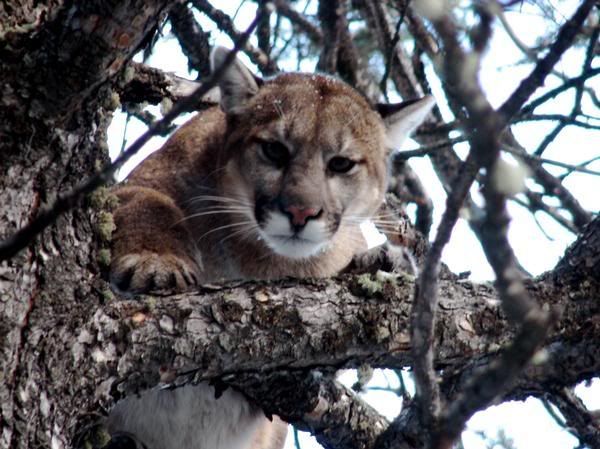
When you see a lion, you know there are too many. This story comes from Washington and is a sample of a situation that is growing more and more common. Why is it so, you ask? Some say we are  encroaching on lion territory. We have always done that. I say it is because there are too many lions.

One less lion, many more deer

One less lion, many more deer

——————————————

Sightings of a cougar in Beaver Brook and the west side of Barrhead are more a cause for caution than alarm, wildlife officials say.

Derek Brendzan, a Barrhead District Fish and Wildlife officer, said drainages on the west side of town that lead into the Paddle River are used as highways for predators to follow their prey. In recent years, a large number of mule deer have been migrating along a north-south corridor that stretches along the west side of town through Beaver Brook.

A cougar may have moved in to feed on these deer, he said.

To date, Barrhead District Fish and Wildlife has received about four cougar sightings. Some of the descriptions can fit either a cougar or a coyote, Brendzan said. Wildlife officers have not been able to confirm the presence of a cougar or a cougar’s kill, but Brendzan would not be surprised if one of the animals was in the area.

Town staff recently installed signs along the west side of town alerting people to the sightings and providing safety tips.

Brendzan emphasized that people should not be overly concerned but should exercise caution in the area, especially in the early morning and at dusk, as the animals are nocturnal.

Fish and Wildlife will continue to monitor any sightings.

“As long as it’s doing its thing, we leave it alone,” Brendzan said. “If it comes to the point that it starts impacting people or property, then we come along and remove it.”

Beaver Brook resident Theresa Cherwonka was walking to the health club at about 7:00 a.m. two weeks ago. While she was on a path behind the Champion Feed Services building, a truck backfired and a large animal dashed across the path.

“At first I thought it was a coyote, but no – it didn’t have the head of a coyote. It had the head of a cat,” she said.

Cherwonka described the animal as being about “15 inches deep and six to seven feet long (outstretched) as it leaped, with an orangy-brown colour.”

The sighting unnerved her and she took a different route home, where she called Fish and Wildlife to make a report.

Cougar sightings are very rare. They can sometimes cause alarm in a community because they are “large carnivores that we are not used to,” Brendzan said. Brendzan has spotted only two cougars in the wild in his 10 years with Fish and Wildlife.

Attacks on people are far rarer. Citing a 2006 study by the American Academy of Forensic Sciences, Brendzan said North America has seen fewer than 12 human deaths by cougar attacks in the 100 years prior to the study. By comparison, the study said about one death a year occurs in the United States from domestic dog attacks.

If a cougar is in fact in the area, Brendzan said the mule deer will most likely leave once several have been taken. The cougar will then probably follow its prey out of the town as well, he added.

Pamphlets with safety tips and information on cougars are available at the Fish and Wildlife Office, the Town Office and the County Office. Any sightings of cougars or possible cougar kills can be reported to the Barrhead Fish and Wildlife Office at 780-674-8236.

Idaho changes coming in 2010

Posted by admin on Tuesday, 4 August, 2009

Hunters and others presented many proposed changes to Idaho hunting rules. Here are a couple that may effect mule deer hunters:

You will be able to go find your wounded buck with a dog and, there are to be travel restrictions in units 66a and 76. This is supposedly to help more deer survive the hunt.

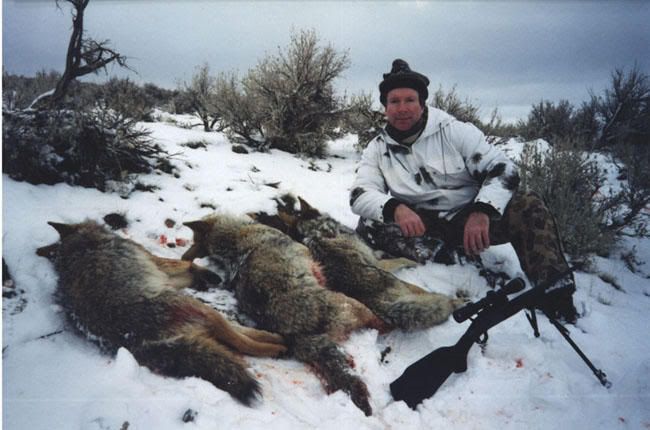
Coyotes Hammer Fawns

Posted by admin on Monday, 3 August, 2009

Read the rest of this entry »

Utah Forecast by Region

Posted by admin on Saturday, 1 August, 2009

Northern Region

Archery hunters should see more deer in northern Utah this fall.

“The number of deer has increased following a mild winter and a wet
spring and early summer,” says Randy Wood, regional wildlife manager.
“Hunters should see more yearling bucks this fall.”

Wood reminds hunters that the Northern Region includes large chunks of
private property. “It’s a good idea to get written permission from
landowners before planning a hunt to an area that has private
property,” Wood says.

Wood says pre-season scouting will improve your success. “And please
remember that you’re hunting in bear country,” he says. “Keep
your camp clean.”

Wood provides the following preview for each of the region’s general
season hunting units:

Box Elder unit

This past winter was mild on the Box Elder unit, and the unit received
lots of spring rain. The vegetation is lush and tall. The deer are
very scattered and are not concentrated near water as they have been in
past years. The number of bucks should be up from last year. After
last fall’s hunting season, the number of bucks was just over 14 bucks
per 100 does in the western part of the unit. In the eastern part of
the unit, the number of bucks was 22 bucks per 100 does. Biologists
estimate the number of deer on the unit at 14,300 animals. That’s 72
percent of the unit’s desired objective of 20,000 deer.

Cache and Ogden units

Biologists estimate the total population on the Cache unit at 15,000
deer. On the Ogden unit, they estimate the total population at 7,500
deer.

Fawn production was good in 2008. And very few fawns died during the
winter of 2008-09. That means more yearling bucks should be available
to hunters this fall. Half of the bucks will be yearlings. With good
spring moisture, expect to find deer dispersed across the high country.
The best place to find deer is at the edges of timber and open meadows
in the mornings and the evenings.

After last fall’s hunting season, the buck-to-doe ratio on the Ogden
unit was just over nine bucks per 100 does. On the Cache unit, the
ratio was more than 10 bucks per 100 does. These numbers are below the
unit objective of 15 bucks per 100 does. The low buck numbers were
mostly the result of heavy winter losses during the winter of 2007-08.

Morgan/South Rich and East Canyon units

Thanks to a mild winter and good over-winter survival, deer numbers are
increasing on both units. The number of yearling bucks is increasing,
and many mature bucks have been observed too. After last fall’s
hunting season, the buck-to-doe ratio on both units was just over 25
bucks per 100 does. Deer should be spread throughout the units, with
the greatest number found at higher elevations. That’s where the best
forage is this time of the year.

Chalk Creek and Kamas units

Deer on both of these units use both high and low elevations. Deer at
low elevations use agricultural fields for food and irrigation flows for
water. At higher elevations, there’s abundant water and forage. For
these reasons, the deer will be scattered. You’ll need to do some
preseason scouting to find them.

After last fall’s hunting season, the buck-to-doe ratio on the Chalk
Creek unit was 33 bucks per 100 does. On the Kamas unit, the ratio was
19 bucks per 100 does.

The Chalk Creek unit is almost entirely private property. You must
have written permission from landowners before hunting on private land
in the unit.

The Kamas unit is mostly private property, but there is Forest Service
property in some of the higher elevation areas. The deer will be
scattered because of abundant water and forage. You’ll need to do
some preseason scouting to find them. Deer hunting on the unit should
be good.

North Slope/Summit unit

Archery and muzzleloader hunting is usually good on this unit. Most of
the deer start leaving the area before the general rifle hunts begins in
October.

Central Region

The winter of 2007 – 08 was tough on deer in north-central Utah. That
rough winter, coupled with a hot summer just a few months later, means
archery hunters may not see the number of deer they’re used to seeing
in the region.

While the overall number of deer in the region is down a bit, the deer
seen by hunters should include a decent number of bucks. The three-year
buck-to-doe average in the region is at the management objective of 15
bucks per 100 does.

“Last fall, about 12 percent of the archery hunters in the region
took a deer,” says Scott Root, regional conservation outreach manager.
“The harvest success in the region is usually between 15 to 16
percent during the archery hunt.”

Root says archers who have scouted the region this summer and DWR
biologists expect a little better success this year. “Our biologists
and several archers we’ve talked with have seen decent numbers of
older age-class bucks.”

Root says there’s plenty of vegetation and water in the eastern part
of the region. And that will probably keep the deer scattered. “Deer
have been seen at all elevations, from residential foothills to high
elevations,” Root says.

However, if the dry, hot weather continues, Root says watering holes
could start to dry up. “And that would improve hunting at the
watering holes that remain,” he says.
Important reminders

Archery season ends Sept. 1 on two units

Low buck-to-doe ratios on the Nebo and Oquirrh-Stansbury deer hunting
units means both units will have shorter deer hunting seasons this fall.
For example, the archery deer hunt on the two units runs from Aug. 15
until Sept. 1. The other general hunting units in the region will
remain open for archery hunting until Sept. 11.

A boundary description for both units is available at
www.wildlife.utah.gov/maps/2009_biggame. Once you reach that part of
the site, click on the “General season buck deer units with shorter
season dates” selection.

Until Sept. 2, only Central Region archers can hunt extended area

If you’re interested in hunting the Wasatch Front Extended Archery
Area — but you don’t have a Central Region archery buck deer permit
– you can’t hunt the area until Sept. 2. Until Sept. 2, only Central
Region permit holders can hunt the area.

Archers may take a deer of either sex on the area from Aug. 15 until
Nov. 30. From Dec. 1 through Dec. 15, the only deer that may be taken
are deer without antlers.

Park City is now part of extended archery area

The area surrounding Park City is now part of the Wasatch Front
Extended Archery Area. But hunters should be aware that most of this
area is private property. You must have written permission from
landowners before hunting on private property.

A map and boundary description for the Wasatch Front Extended Archery
Area is available at www.wildlife.utah.gov/maps/2009_biggame.

You can find the map and the boundary description by scrolling down to
the “Extended archery-deer” category.

Northeastern Region

The harsh winter of 2007 – 08 took a toll on deer herds in northeastern
Utah.

“The winter of 2007 – 08 was hard on the deer herds,” says Charlie
Greenwood, regional wildlife manager. “A lot of fawns died. The loss
of those fawns will affect the number of bucks available to hunters for
the next few years.”

Greenwood says after last fall’s hunts, the buck-to-doe ratio on the
region’s public-land units averaged 14½ bucks per 100 does. That’s
just under the minimum objective of 15 bucks per 100 does.

“Overall, hunters should expect lower success than they’re used to
finding in the region,” Greenwood says.

Greenwood reminds archery hunters that Sept. 1 is the last day they can
hunt on the South Slope (Vernal) unit. “The buck-to-doe ratio on the
unit is low enough that we’ve had to shorten all of the deer hunts on
the unit,” he says.

Southeastern Region

The overall number of deer in southeastern Utah is still below the
population objective for the region. But the number of bucks compared
to the number of does is improving.

“Buck-to-doe ratios are improving across the region,” says Brent
Stettler, regional conservation outreach manager. “For example, on
the Central Mountains-Manti unit and the LaSal Mountain unit, the ratio
is 17 bucks per 100 does. On the Abajo Mountains unit, the ratio is 20
bucks per 100 does.”

While the number of bucks compared to does is improving, the overall
number of deer in the region continues to hover below the region’s
population objective. “On the Central Mountains-Manti unit, our
biologists estimate the deer population at 20,000 animals. That number
should be closer to 40,000 deer.

“The LaSal Mountains unit, with an estimated herd size of 7,400 deer,
stands at only 57 percent of its herd size objective of 13,000
animals,” Stettler says. “However, the Abajo unit has rebounded
to 85 percent of its herd objective with a current population of about
12,800 deer.”

Stettler says lots of rain fell in the region this past spring and
early summer. That precipitation has provided good forage for deer
across southeastern Utah, and Stettler says the deer appear healthy.
They’re also widely dispersed.

“In July, the rain turned off and the heat turned on,” he says.
“Those factors combined to move deer into drainages near water or
onto cooler north-facing exposures. You’ll find most of the deer in
the region at medium or high elevations.”

Stettler encourages you to do some pre-season scouting. “Once
you’ve selected an area to hunt, learn where the springs, seeps and
creeks are in the area,” he says. “Get to know the game trails, the
bedding areas and the routes deer might use to escape hunters once the
hunt starts.”

How hunting pressure might affect the deer is another important factor
to consider. “Make sure you consider that factor as you put your
overall strategy together,” he says.

Southern Region

Prospects look bright for archery hunters in the Southern Region. The
number of bucks per 100 does on most of the region’s units is higher
than the minimum objective.

“Hunting should be good this year,” says wildlife biologist Dustin
Schaible. “The number of deer on the Panguitch Lake unit is over the
unit’s population objective. In addition, there are good numbers of
bucks. After last fall’s hunting season, we counted 19 bucks per 100
does.”

Schaible says the total number of deer on the Mount Dutton unit
continues to increase. And the number of bucks does too. “The
buck-to-doe ratio on the unit was 22 bucks per 100 does after last
fall’s hunts,” he says.

Schaible says the Panguitch Lake unit is fairly easy to access. For
that reason, it usually draws more hunters. “It can become
crowded,” he says. “The Mount Dutton unit, on the other hand,
attracts hunters who want to get off the roads and do some backcountry
hiking.”

DWR biologist Jim Lamb says both the Monroe and Plateau units have good
numbers of young bucks. “We’ve had great moisture this summer, so
the deer may even have some better antler growth,” Lamb says. “The
deer will be high for the opener. Also, it may be hot, so remember to
dress your deer quickly and cool the meat down.”

Because the three-year buck-to-doe average on the Monroe unit is low,
Sept. 1 is the last archery hunters can hunt on the unit this fall.

Wildlife biologist Jason Nichols says the Southwest Desert unit had a
good buck-to-doe ratio after last fall’s hunts: 27 bucks per 100 does.
“The overall number of deer on the Southwest Desert unit is small,
but the population is slowly increasing,” he says.

After last fall’s hunts, the buck-to-doe ratio on the Zion unit was
25 bucks per 100 does. “There are a lot of deer on this unit, but
there’s also a lot of private land,” Nichols says. “Before
hunting on the unit, make sure you have written permission from
landowners.”

The Pine Valley unit had a buck-to-doe ratio of 21 bucks per 100 does
after last fall’s hunts. “This unit has a lot of deer, but the unit
also draws a lot of people,” Nichols says. “The deer on this unit
migrate early to their winter ranges.”